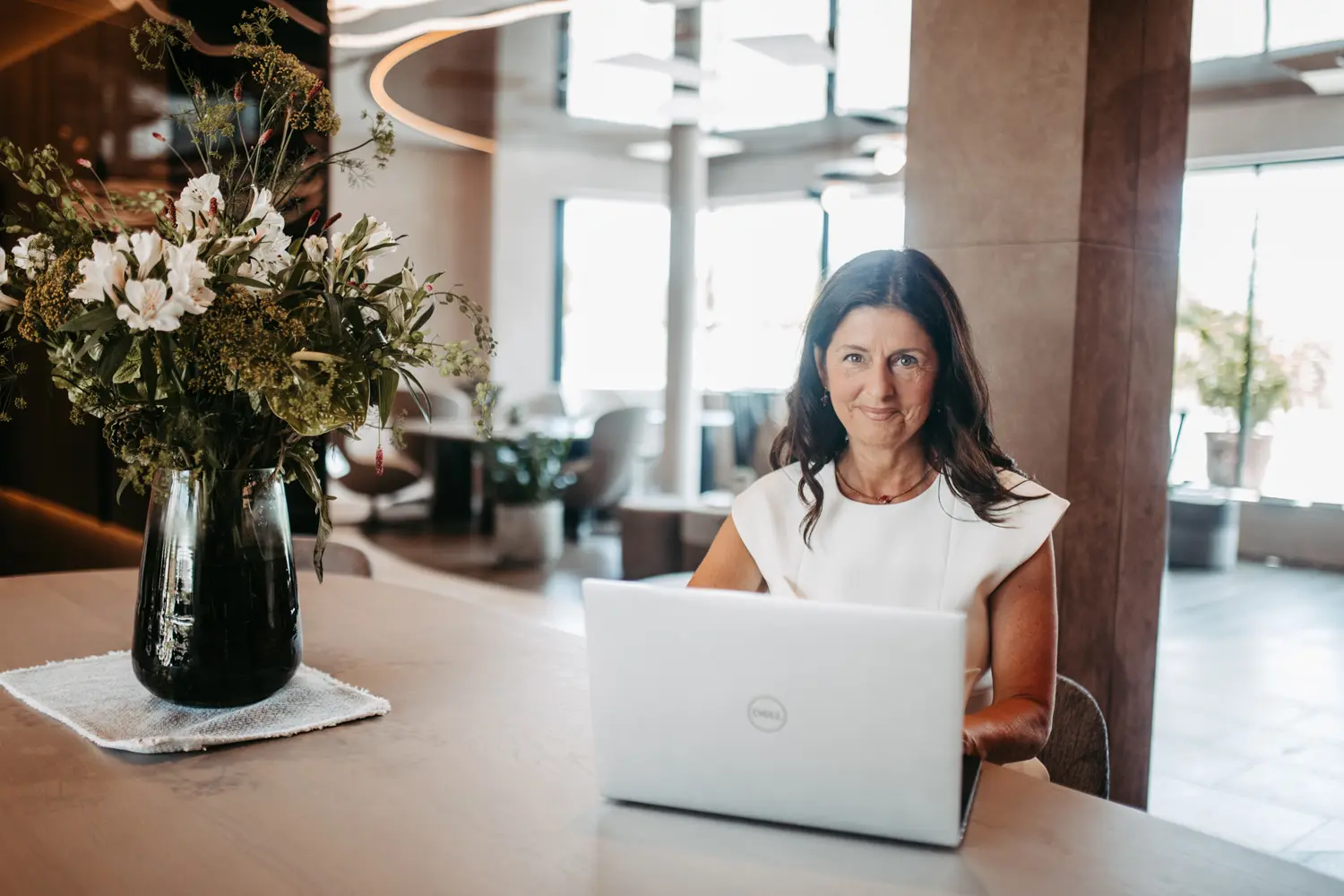
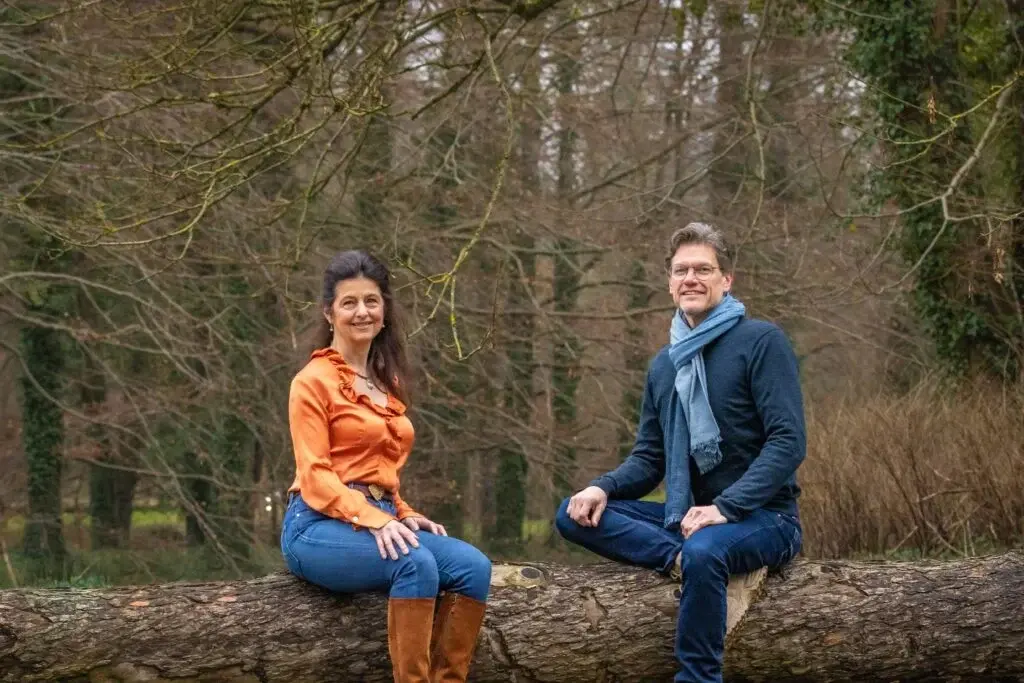
In this monthly column, appreciation expert Nathalie Arteel shares tips on how to use recognition as a foundation for a positive company culture and personal happiness. This time, she had an engaging conversation with Belgian top neurologist Steven Laureys, who now lives in Canada.
“Is there a connection between a positive, appreciative company culture and a healthy brain?”
Nathalie Arteel doesn’t hesitate for a moment. As Leading Angel of Arteel Group, she encourages organizations to invest in a culture of recognition:
“By creating a culture where people feel seen, supported, and safe, heart-to-heart connections emerge, trust is built, and creativity flourishes.” With this principle in mind, she spoke with neurologist and author Steven Laureys.
“I am convinced of the added value of personal and social skills, which are harder to measure. It is crucial to invest in company culture and the work environment,” says neurologist Steven Laureys from Canada, where he works at the CERVO Brain Research Center at Laval University in Quebec. Just as he previously did with Buddhist monks, he scans the brains of Native Americans to learn from their neural patterns.
“A negative work atmosphere has a visible effect on the brain,” he explains. “We see the hippocampus shrink, meaning the structure of the brain changes under chronic stress. This has consequences because the hippocampus is important for memory. Studies show that business, politics, and universities are often harsh worlds, with large hierarchical structures. But it doesn’t have to be that way: more horizontal and participative structures are possible.”
Feeling appreciated
Nathalie Arteel focuses on creating an environment where people feel valued, supported, heard, and seen. When you enter a culture of recognition, it benefits both the quality of your brain and your life. You are then more likely to use every moment to make a positive contribution.
According to Nathalie, however, a lot of social capital was lost during the COVID period: “Many employers have no idea how their people are feeling, and even colleagues don’t always know anymore.”
Steven Laureys points out that neurologists can see this in the brain: “The pandemic, with all its uncertainties, has only increased our stress levels. Our brain struggles with uncertainty—it’s a prediction machine. If we cling too much to the past or focus too much on the future, it can become overwhelming. We get caught in a negative spiral of stress and rumination, constantly recalling unpleasant situations.”
“After a discussion with a colleague, you might think: I should have said that—and then you dwell on it again. Because we are so prone to repeatedly revisiting negative thoughts, it can lead to burnout or worse,” warns Steven Laureys. “But studies also show that we can reverse this: the positive spiral is possible.
And very importantly: employers can contribute too. You cannot change your colleague, boss, or partner, but you can change how you deal with it. It is a universal need to feel appreciated. I believe we invest too little in truly listening to others and valuing the expertise, opinions, and work of those around us.”
Happiness Pill
“We all want to be happy,” says Steven Laureys. “I don’t know anyone who consciously says: I want to be unhappy. Most people in Flanders have everything—so why do we still feel so unhappy? It’s devastating to see so many young people who seemingly have it all trying to take their own lives.”
“I think your initiative to build a positive and appreciative company culture that contributes to the experience of happiness is fantastic,” he tells Nathalie. “I also strongly believe in the neuroplasticity of the brain, but for each of us, it applies that we can impact our own brains by handling differently everything that comes at us.”
“People are often disappointed when I don’t prescribe a pill,” he adds. “Certain neurotransmitters—oxytocin, serotonin, dopamine—are important, but I’m not a fan of labeling them as ‘the happiness hormone.’ When Prozac came to market, many people took that happiness pill, but of course, that didn’t make them truly happy. Happiness is far more complex. Your brain is incredibly intricate and is constantly interacting with its environment.”
I feel, therefore I am
“When you pause to reflect on how you feel and what your job means to you, you can become more assertive about what you don’t like and work with colleagues to find solutions,” explains Steven Laureys.
“But we haven’t learned to ask important questions like: how do I really feel? How do you feel? How do we treat one another? We need to reconnect with our own values and emotions.”
Nathalie Arteel recognizes this: “Early in my career, I was constantly adapting and, in a way, denying my own values. I continuously adjusted my story to the person in front of me. And that doesn’t work. Because I wasn’t balanced myself, I only became unhappier. I realized that to be free, I had to be myself.”
“We tend to push aside our feelings too much and too quickly,” agrees Steven Laureys.
Descartes said: I think, therefore I am. But it is also: I feel, therefore I am.
This is something we need to focus on more, even in education. We invest ridiculously little in emotional intelligence and emotional well-being. These are words we use, but there is still no equivalent in schools for emotional guidance like there is for physical education. It is scandalous that we continue to neglect it. Just as you brush your teeth every day, you can do the same for your mental well-being.”
Impact of company culture
Nathalie Arteel wants to encourage business leaders to adopt a culture of recognition and inspire them to look through a positive lens of appreciation and gratitude, thereby creating a loving environment that connects. The feelings this generates elevate both you and your people and attract the right talent.
“In studies, we see that we manage stress better when we invest in company culture overall, and in meditation specifically,” adds Steven Laureys. “Meditation is an invitation to be aware of wandering thoughts and to bring your focus back. Meditation is a powerful tool for creating focus. Without resorting to some magical shortcut, I think it’s important to see the measurable effects that meditation and mindfulness-based stress reduction interventions have.”
“We live in a competitive culture and want to achieve a lot, but you cannot run a marathon at sprint speed. Sometimes it’s good to just let go, observe, and accept,” advises Steven Laureys. “Employers should consider whether they want people to be constantly busy or sometimes simply doing nothing.
And no, we are not all meant to become Matthieu Ricards or Dalai Lamas, but we can learn from them. It’s about your overall attitude and how you respond more consciously when something happens or is thrown at you. Learn that you can handle it differently.”
He also stresses the importance of leading by example: “Sometimes I give lectures, and management doesn’t show up. How the CEO lives influences every other level in the company. In my book No-Nonsense Meditation, I use Schoenen Torfs, the best employer in Europe, as an example. They practice meditation and talk about it together as colleagues. It shows that you can participate differently even in a competitive business.”
Companies as a community
“I grew up with my mother, and we didn’t have much. At boarding school with the nuns, I learned to be grateful for what you do have,” reflects Nathalie Arteel. “Every Sunday I would bike alone to church to express my gratitude. The feeling of belonging, the weekly gathering to be thankful—it gave me strength. Viewing your company as a kind of community where you feel at home, supported, and safe. An environment where love and hard work coexist, where you go to work every day with enthusiasm, a place to mentally nourish and recharge. Such a community becomes a magnet for attracting the right people.”
Companies as a community? Steven Laureys believes it is possible: “Meaning, spirituality, and being impactful are universal needs. Historically, religion provided that meaning, but it can also be fulfilled in a secular way.
I think company leaders, as well as those in politics and media, have a responsibility to be inspiring.
We face great challenges, but we should remain naively optimistic to see the positive side. Yes, there are Poets and Trumps, but there is also solidarity. It is important to cultivate this by training loving-kindness, compassion, and empathy through meditation. That has a measurable effect: we can actually see emotional structures in the brain change. By focusing consciously on what is going well, we can fall asleep at night with gratitude.”