
Nathalie Arteel in conversation with Arjen Banach
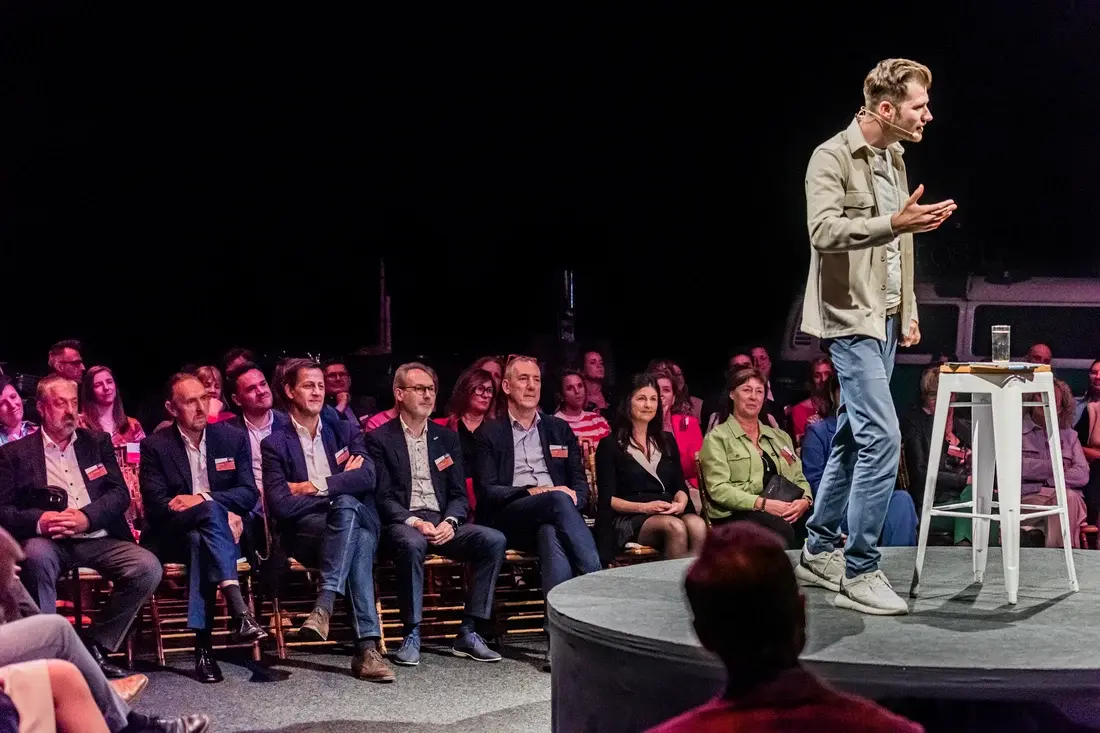
How do you design an organizational culture where people want to work rather than have to work? Arjen Banach studies organizations that stand out for their workplace culture. As a keynote speaker, he talks about employees who are motivated to work in organizations where recognition is central. Nathalie Arteel spoke with Arjen about values, recognition, and workplace happiness.
Organizations Need a Destination
“Did you know that an airplane constantly drifts off course? If the pilot didn’t make continuous corrections, the plane would end up somewhere other than its intended destination. Because the destination is predetermined, it’s clear when adjustments are needed to stay on track,” begins Nathalie Arteel.
“Organizations also need a predetermined destination. It provides direction and stability. The many challenges and pressures of work constantly push employees and leaders off course. Just as a plane must make corrections to get back on track and reach its final destination, organizations must do the same.
“That’s why it’s so important to use a compass: where do we want to go, what are our vision and mission, what impact do we want to create, and what are our values? Within an organization, these values translate into behaviors that connect people with each other and with the organization. By rewarding the right behavior, you create a workplace where people are happy.”
What Is the Right Behavior?
According to Arjen Banach, keynote speaker and organizational futurist, this is still unclear for many organizations—especially since COVID-19. “We experiment a lot and are not intentional enough when it comes to recognition.”
Nathalie sees recognition as closely linked to values: “The right behavior aligns with your organization’s values. If we reward that behavior immediately, we get more of it.”
The professional of the future will need to adapt and be agile. You cannot force people to do this, but you can create the right environment where they are inspired to demonstrate the right behavior—and as an employer, recognize and reward it positively when it happens.
Working Less with Greater Impact
We need to create more breathing space to intentionally focus on recognition, but is there really time for that with all the workload?
Arjen challenges this: “Are we really that busy? There’s a lot of complexity, but we shouldn’t place the blame for workload entirely outside ourselves. Is this workload truly imposed from above or externally? Or do we partly create it ourselves through ineffective ways of working? We shouldn’t make workload bigger than it is. Workload usually emerges from culture and structure.
“The key to solving workload issues largely lies with employees and organizations themselves. We work too many hours with too little impact.”
“Essentially, work can be divided into three categories:
- Category A: work for which an employee was hired and where they create real value;
- Category B: work that every employee must do to enable Category A work effectively;
- Category C: work that isn’t necessary and creates no added value. Workload usually arises in Category C.
If you focus on the first two categories, you’ll find that the workload is manageable and there’s time left for growth, development, and even (re)inventing your job,” notes Arjen.
Building Resilience
“We’re better off helping employees become not just executors, but inventors of their jobs,” Arjen continues.
He identifies two ways to assess work: performance-oriented or learning-oriented. “Organizations have created work environments where people are only judged on how the work is done today. This puts employees in blinders, traps them in an execution role, and discourages them from personal development or reinventing their work. This is harmful, because work has become very complex. Everyone—regardless of their current role—will eventually feel the impact.”
“So we’d better stop pampering people and letting them believe that just doing their job well now guarantees everything will be fine.”
“Caring for your employees means making them resilient,” Nathalie adds. “We need to challenge them to think independently when changes occur in their job or career.
Caring for your employees isn’t just about ensuring they’re financially secure. It’s about making sure every employee feels heard, seen, and valued.
Financial recognition is easy, but attention is the new gold.
And that’s only possible if managers and leaders themselves are empowered and balanced.”
Learning to Recognize
“Teach employees and managers to view everything through a lens of recognition. That’s the greatest gift an organization can give and has the biggest effect on workplace happiness,” says Nathalie. In our rush to change, we often try to implement too much, too quickly, and too dramatically.
She advocates starting with small changes. “Keep it simple, take small steps, and never underestimate the importance of rituals. James Clear also recommends this in Atomic Habits.
“Improving by 1% each day isn’t noticeable in the short term, but over a year, the difference is enormous. Behavioral change starts with awareness, focus, and the will to evolve in the right direction.”
Measuring Matters
Nathalie sees a major responsibility for HR in creating transparency and accessibility. “We spend too much time and budget on expensive leadership training, yet the return is limited. We’re better off making the right behavior visible across teams and organizational boundaries. Recognition can be managed and must be measured. Managers who never express recognition should be held accountable. This requires a system that maps recognition and measures it until it becomes a habit. HR should take a holistic view of the organization, adopting an entrepreneurial mindset.”
“The focus of HR should be on leadership, because managers have the greatest impact on whether employees work happily, efficiently, and effectively,” concludes Arjen. “This can be achieved by selecting the right leaders and supporting them to sustainably fulfill their role. When leaders are empowered, demonstrate the right behavior, and help create the right context for employees to surpass themselves, you get a multiplier effect.”