
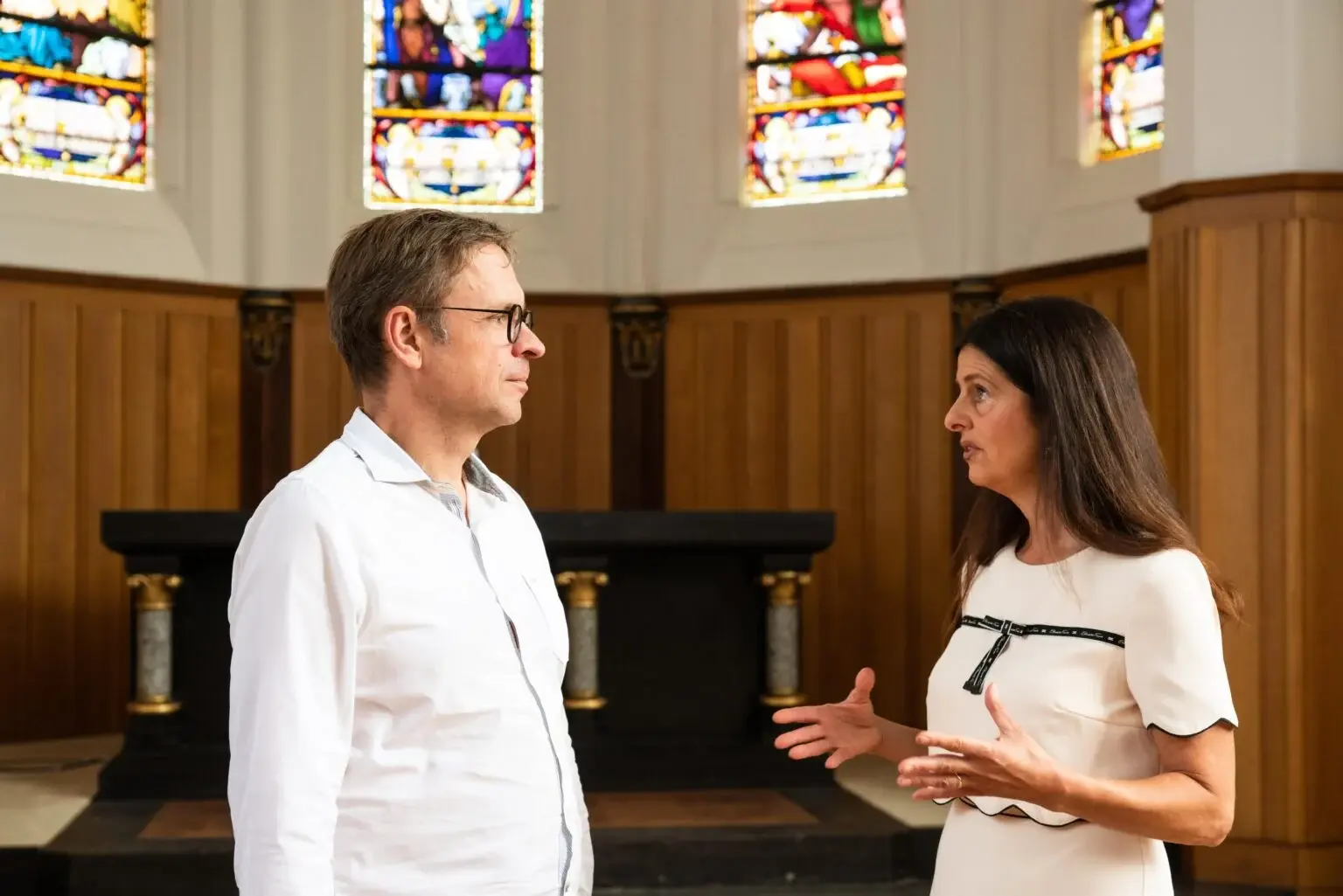
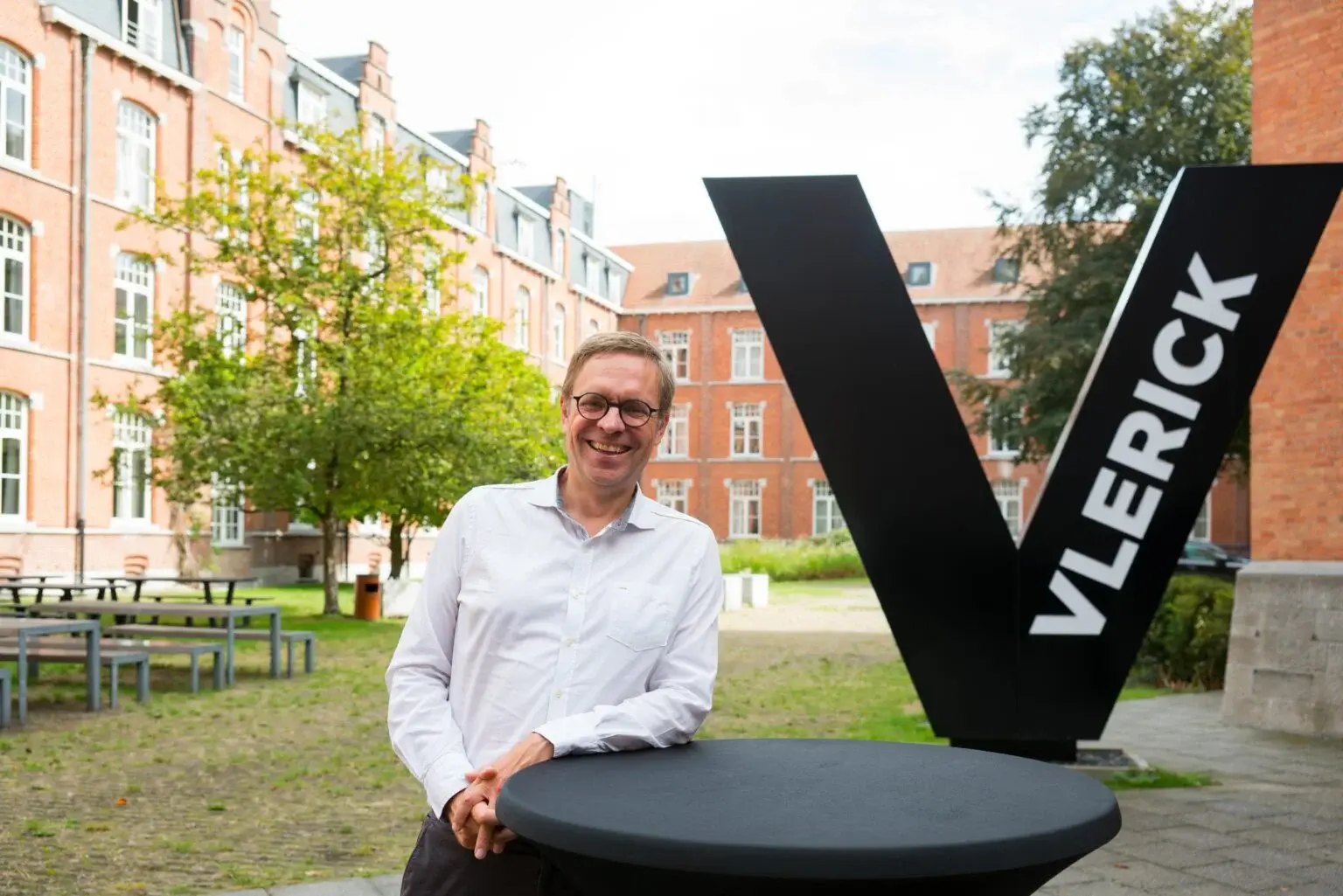
This month, Nathalie Arteel had a fascinating conversation with Xavier Baeten, Professor of Reward Management & Sustainability at Vlerick Business School. He is the European reference in reward management, combining his academic expertise with the development of strategic reward strategies for companies and membership in remuneration committees. In her role as Culture & High Performance Expert, Nathalie Arteel asked him about trends in recognition and rewards.
Looking back over the past 20 years, most companies and even governments have heavily invested in financial rewards: compensation & benefits packages, cafeteria plans, financial perks, bonuses, and various vouchers. But is there a direct link between rewards and engagement? That was the opening question Nathalie Arteel posed to Xavier Baeten.
Financial versus non-financial rewards
Xavier Baeten: “I don’t want to fall into a strict dichotomy between financial and non-financial rewards. I can say, however, that it is non-financial rewards that drive engagement. I can demonstrate that when employees leave or intend to leave a company, money does not rank highly. At number one is how the total reward package is experienced by the employee.
‘For me, the core is clear: reward people fairly financially and make a difference by attaching non-financial rewards to that.’
Within non-financial rewards, recognition, company reputation, and participative management make the difference. I believe participative management still receives too little attention, even though stakeholder engagement is increasingly important. I believe in a culture of recognition, and I don’t think highly hierarchical, top-down organizations can provide sufficient recognition and participation.
Some organizations develop purely mathematical reward schemes. But that doesn’t work. It’s like teaching a child to use the potty. As a parent, you don’t say, ‘At the end of the year, this will determine whether you get a gift or bonus.’ You reward the child immediately when they succeed.
Yes, it’s that simple: go back to the basics of upbringing, and you’ll understand. I also know that measuring non-financial rewards isn’t easy, but focusing everything on financial rewards seems dangerous. There’s also a risk of even more burnout. This means we need to look at the bigger picture: how should we approach this differently in the future? The answer largely lies in meaningfulness.”
Collective versus individual rewards
Nathalie Arteel: “More and more companies are building a strategic recognition policy. I notice that increasingly, organizations are looking for ways to reward positive behavior immediately. They struggle with the fact that too many collective bonuses are being given out. Ultimately, that demotivates people who go above and beyond. They either start looking for another challenge or settle into a golden cage. How do you see this?”
Xavier Baeten: “We need to be aware that rewards can easily backfire. A concrete example is merit matrices. You get a score from 1 to 5, we check your position in the salary band, and we assign your pay raise. That seems objective, but subjectivity inevitably creeps in when giving the score. Deciding whether an employee has performed well or very well is a real nightmare for many managers.
I’m pro collective rewards, but combined with individual recognition. Also, don’t overdo financial individual recognition: if you receive a bonus three times higher than mine, that will completely demotivate me, and I will disengage.
‘I think we often break reward systems because everything is ultimately individual. It’s important that it can also operate at the team level. That requires creativity in designing the system. We need to dare to involve employees in shaping the policy.’
Trust the judgment of line managers and give them the right tools. For example, at ABN AMRO in the Netherlands, managers are asked to consider three elements:
- Behavior: Is it in line with responsibilities, and does it help the team progress?
- Development: Is the person growing and following training?
- Vitality: Does the person have energy and can they set priorities?
Managers are then asked to evaluate based on facts. That is very different from purely mathematical targets.”
Freedom and Responsibility
Nathalie Arteel: “Do you see other possibilities to go beyond purely financial rewards and to shape individual recognition?”
Xavier Baeten: “It is both an art and a matter of skill to develop recognition systems with degrees of freedom and responsibility – and with an element of surprise. That element of surprise is far too rare in rewards. Let’s be honest: there are so many more positive than negative behaviors you can acknowledge in people, but as a manager, you need to see them and feel them: this is a milestone, and now we’re going to do something, give recognition, or reward.
My experience is that once you create that culture, it also becomes easier to provide constructive criticism. That criticism is then better received. If people never receive compliments and it’s always just criticism, they become defensive and systematically adopt a defensive posture.
In compensation & benefits programs, we focus too much on quantitatively assessing people, which sometimes pushes them into a defensive corner. The most interesting question in an evaluation conversation, in my view, is: what didn’t go so well? That’s where real learning happens.”
Sustainable Reward Management
Nathalie Arteel: “A growing trend in rewards is responsible rewards. Employees receive vouchers they can use to support charities, local businesses, or their own health. What developments do you see in this area?”
Xavier Baeten: “Responsible rewards are still new, and people are just discovering them. For me, it’s important that they are embedded in a larger framework. It’s a piece of philanthropy, but make it strategic as well.
‘Ask yourself: what business are we in, and where can we have an impact?’
Many companies are already focused on sustainability. At the Centre for Excellence in Strategic Rewards, we asked how rewards could be aligned with sustainability, and we looked at the United Nations Sustainable Development Goals. We found that no fewer than nine out of seventeen goals can be strongly linked to rewards. That is very powerful. But the biggest mistake organizations can make is trying to tackle everything at once.
‘My advice is: think together with your employees about what you want to focus on.’
This will differ for a bank, a retailer, or a transport company. And then the question becomes how you translate that into actions as a company. But be careful not to create a culture where employees feel guilty if they don’t choose the “right” cause or take a little time for themselves…”