
In her monthly column for #ZigZagHR, appreciation expert Nathalie Arteel shares tips on how to use appreciation as the foundation for building a positive company culture and personal happiness. This time, she got up extra early to have a conversation via Teams with Frederik Anseel, who, on the other side of the world in Australia, is Professor of Management at the University of New South Wales in Sydney. Together, they talked about organizational culture, appreciation, and rituals.
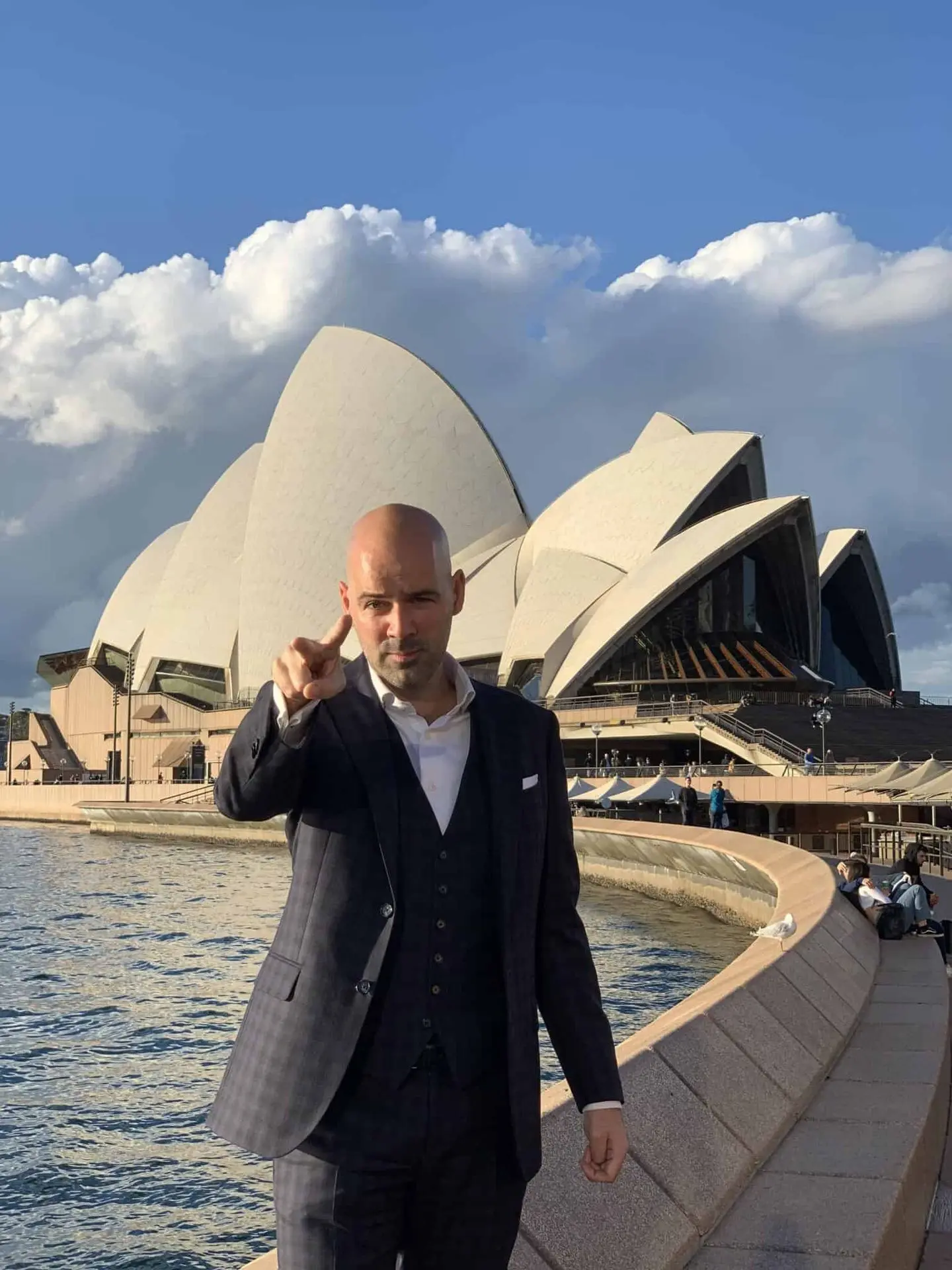
“When you wake up every morning to blue skies, a shining sun, and a view of the ocean, it’s hard to feel pessimistic or downhearted. It truly makes a difference in how you feel,” says Frederik Anseel about his stay in Australia.
However, those blue skies, that radiant sun, and beautiful views are often missing in the workplace… “When you feel that what you do every day at work goes unseen and unacknowledged, getting out of bed in the morning becomes difficult,” Frederik Anseel wrote last year in an opinion piece for De Tijd. Yet, the feeling that we matter to others lies at the very core of who we are.
Culture
Nathalie Arteel: “Making people feel that they matter — and anchoring that deeply within the organizational culture — is what drives me. How do you see that? What is your perspective on the foundation of a strong organizational culture?”
Frederik Anseel: “I don’t believe there’s a recipe for a good culture. I see culture as an indirect result of the actions you take. Culture is a complex interplay of different, intangible factors. It’s elusive.”
“My point has always been: how can you search for structure in an authentic and credible way? I have a very sensitive radar for authenticity and substance, and I immediately notice when something is done mechanically, as a technique or a formula. Whatever you do must be genuine. People sense very quickly when it isn’t — and that, in my opinion, is irreplaceable.”
“What I often see, however, is that leadership defines the culture and values at the top, assuming that these will trickle down and that everyone will pursue the same values. The idea that everyone should share the exact same values is dogmatic and paternalistic.”
“I’m an advocate — and my research often focuses on this — for freedom and autonomy, and for creating a structure in which people can exercise that freedom within a broader whole. You can only really determine afterward whether that culture has succeeded.”
Nathalie Arteel: “Where do you begin when building a culture?”
Frederik Anseel: “I’m not sure there’s a clear starting point. I think it begins with paying more attention to who you bring into the organization — and to the potential positive and negative impact of that choice. If you look at how much time, analysis, and procurement effort go into investing in a new building — while an investment in an employee’s long-term career is of similar magnitude — yet that decision is often made quickly and based on gut feeling…”
“I believe that good people attract good people, and that talent attracts more talent. That’s where it all begins — and from there, it’s about which individual behaviors you recognize, name, reward, or address.”
Stories and Anecdotes
Nathalie Arteel: “What do you think actually works?”
Frederik Anseel: “Stories and anecdotes about events — both the good and the bad — within the organization. For example, why someone is seen as a role model for the company. The good stories, but also the bad ones, tend to circulate and be retold over and over again.”
“What you often see in toxic cultures and environments is that, after working there for six months, you start hearing stories like: ‘Be careful with that person, I heard this and that.’ That’s gossip, but those are the very stories that define what’s happening inside an organization. These kinds of stories and anecdotes — the negative ones, but especially the positive ones — are a soft indicator of the culture.”
“The problem — and this is something I often discuss with leaders — is that many of them have very little insight into what’s actually happening or being said on the work floor. The information that reaches them is filtered.”
“As a result, many leaders steer based on incomplete information. They believe they have a healthy culture and that everything is running smoothly, while in reality, there’s a lot of hidden dissatisfaction, frustration, and conflict that never reaches them. Sometimes they even shut it out themselves because they don’t want to hear it — which teaches people that there’s no point in speaking up.”
“I think organizations should provide more support to middle management, because so much — if not everything — depends on the relationships that leaders build with their people. I believe it’s a wonderful gift to give leaders the time and space to truly see their people and to give them attention. Attention, to me, is a key aspect of appreciation: I see you, I hear you, I make time for you. That makes the employee better, it makes you as a leader better, and it strengthens the relationship.”
Rituals
Nathalie Arteel: “How do you see the role of rituals? What kinds of rituals can companies use to integrate appreciation more deeply into their culture?”
Frederik Anseel: “Rituals are very interesting. A ritual is a ritual because a group of people has been doing something for a long time without questioning it anymore. It creates a shared collective meaning. In my view, it’s difficult to introduce rituals artificially. When you try to impose them, they feel forced, and people don’t connect with them.”
“Rituals work best at significant moments. Birth, baptism, first communion, confirmation, marriage, and funerals are important life moments for which the Church traditionally provided rituals. Nowadays, many people seek meaning in other ways — and the same applies to organizations. One ritual we’re missing, for example, is when someone leaves the organization.”
“You don’t need to invent a ritual for drinking tea or coffee together every Friday — that won’t make much difference. It’s about meaningful moments that are disruptive and impactful for people. If you can create something around those moments that gives people collective meaning, then that’s incredibly valuable.”